

Studying a vast number of medications for nursing school exams or the NCLEX can seem like an impossible task. Talking numbers, resources like ATI, Saunders, UWorld, or HESI include several hundred drugs, while others like the Davis Drug Guide or AllNurses.com include thousands. This said, a practicing nurse not only needs to know drug names, but also their clinical uses, mechanisms, side effects, as well as crucial nursing considerations. But fear not! In this post, I’ll share some effective strategies to make pharmacology much more manageable (and even enjoyable)!
Breaking Down the Beast: Focus on One Drug Class at a Time
The key to mastering pharmacology is not to try to learn everything at once. Focusing on one class of drugs at a time allows you to limit your view to a manageable number of facts, as well as better understand the similarities and differences within a drug class. Many nursing school curriculums already break pharmacology into different units, like Med-Surg, Pediatrics, Maternal Health, Mental Health, and so on.
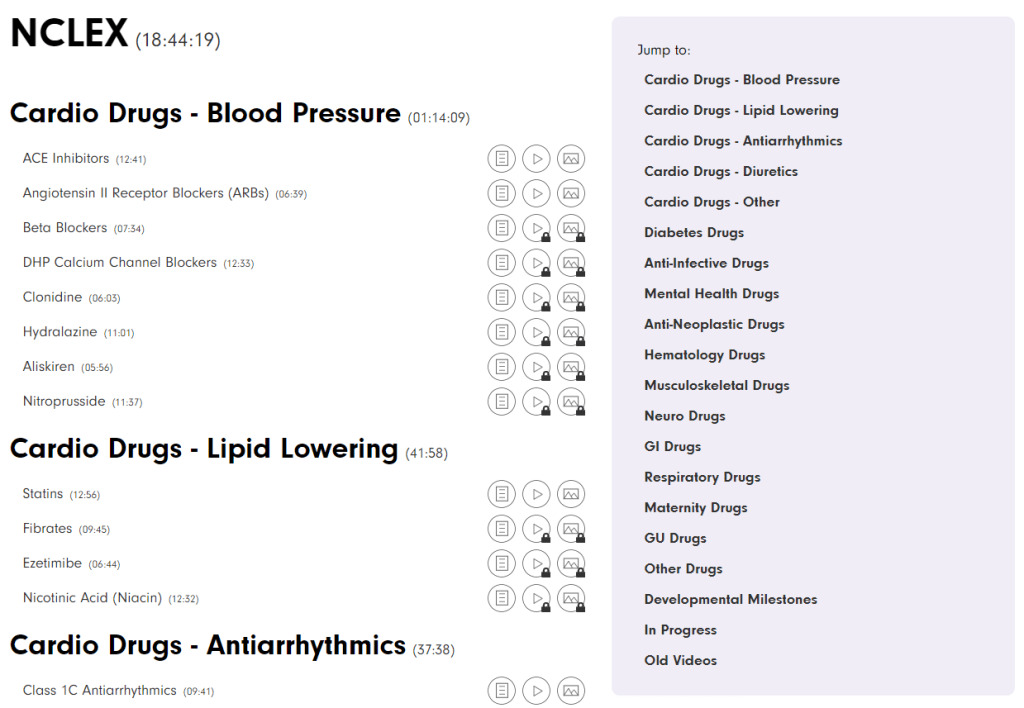
You can take this one step further and break down the drugs into individual drug classes. For example, resources like Pixorize segment the whole of nursing pharmacology into small playlists of less than 8 drugs at a time: like blood pressure drugs, lipid-lowering drugs, etc.
Discerning the Essential from the Non-Essential
Not all information is created equal when it comes to pharmacology. Nursing schools and the NCLEX typically focus on a few types of facts that are highly tested: drug names, side effects (especially those that endanger patient safety, e.g. cause falls), and key nursing considerations (such as how to administer the medication or key contraindications). I recommend comparing your own lecture or nursing school notes against that of a NCLEX resource, and focusing on where the facts overlap.
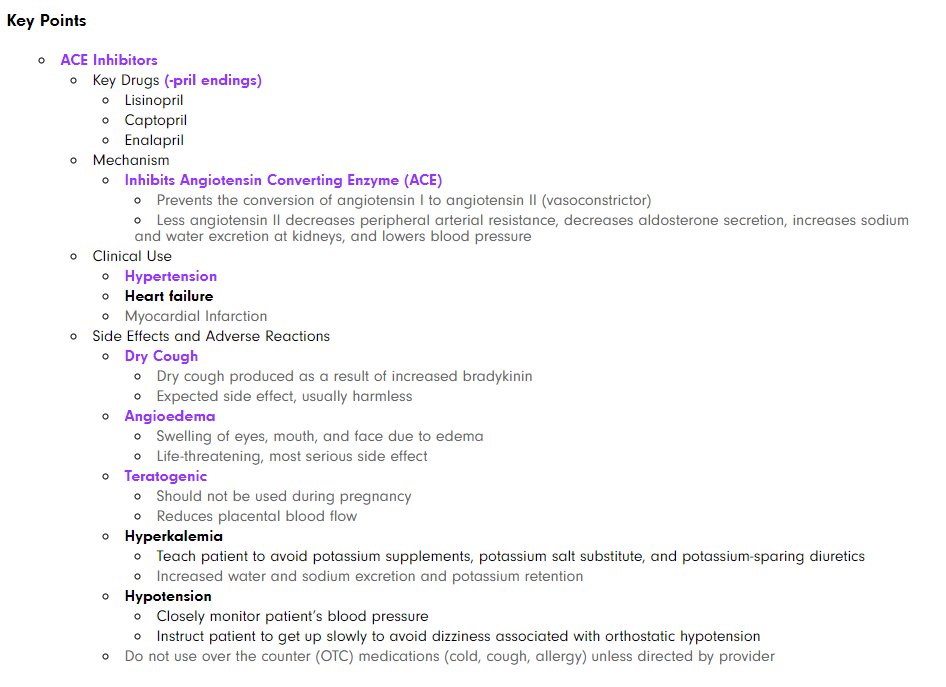
In fact, our team of RNs and ADNs reviews over 22 different resources (e.g. ATI, HESI, Saunders, Hurst, Mark Klimek, among others) as well as nursing school curricula from the largest nursing schools in the nation. We then color code each fact by its importance:
critical and frequently tested facts in purple
facts that are worth studying but not focusing on in black
supporting background knowledge or facts that are unlikely to be directly tested in gray.
Here’s an example of a fact list we’ve prepared for the ACE Inhibitors. Each of these triaged fact lists is a treasure trove of testability – all available for free on the Pixorize website.
Use Image Mnemonics: A Picture is Worth a Thousand Words
If you’re struggling with boredom studying the drugs or forgetting the information soon after you review it, visual mnemonics can be a powerful tool. Platforms like Pixorize turn each list of facts above into a fully immersive narrative: making the content more engaging and harder to forget.
To see the results for yourself, here’s a video for our scene on the ACE Inhibitors for nursing:
Spaced Repetition: The Path to Long-Term Memory
Spaced repetition is a learning technique that involves reviewing information at increasing intervals. Tools like Anki and Quizlet leverage this method, using flashcards to lock the drugs you’re learning into long-term memory.
You can either create your own flashcards to study or use community curated flashcard decks. Spaced repetition can also be combined with the image mnemonics above to supercharge long-term retention. For example, Anki decks that include all of our image mnemonics are available at the Pixorize website.
Practical Application and Constant Review
Applying what you’ve learned through case studies or practical experience in the clinic or hospital is crucial. This practice not only reinforces your knowledge but also helps you turn “book knowledge” into “street knowledge”. After all, it’s one thing to read about ACLS and how to run a code for a patient in cardiac arrest, but another to be the person actually in charge of running one in the hospital. You can treat this as a type of the spaced repetition we discussed earlier – regular review is vital in ensuring that what you learn about drugs stays fresh in your memory.
Conclusion
Tackling pharmacology in nursing school can seem intimidating at first, but with the right tools and strategies, it can be much more manageable and even enjoyable! By breaking down your study material into smaller segments, focusing on the essentials, using visual mnemonics, and leveraging spaced repetition software, you can effectively and efficiently master pharmacology.
Additional Resources
For further support, here are some recommended resources:
- UWorld NCLEX Question Bank: Using question banks to test your understanding is a great way to learn new content.
- ATI NCLEX Review: ATI is a commonly used resource at many nursing schools around the nation.
- Online Forums: Platforms like AllNurses.com offer a community of peers and professionals to discuss and clarify doubts.
- Pixorize and Anki: For visual learning and spaced repetition.
Good luck with your studies, and remember, you’re not just learning for an exam, but to become the best nurse you can be!
See how Pixorize can help you prepare for Nursing School and the NCLEX:
 Pixorize Blog