
At Pixorize, we’re trying to build the highest quality medical education content possible. In this post, we’ll give you a glimpse at the process behind each of our videos, and make the case for why supporting content like ours is important.
See how Pixorize can help you prepare for your exams:
Components of a Pixorize Video
Inspired by the creative process of Pixar and the rigor of academic publishing, we’ve developed a multi-stage process involving clinical content experts/writers, software engineers, artists, and animators. Each component of our videos undergoes multiple rounds of revision and review until they are approved.
Taken together, it can take our team hundreds of hours to produce a single video up to our exacting standards. There are currently over 200 videos in our Biochemistry collection alone, constituting over 40,000 hours of work (assuming a 9-5 workday, that’s around 20 years of a single person’s labor!).

1. The Facts
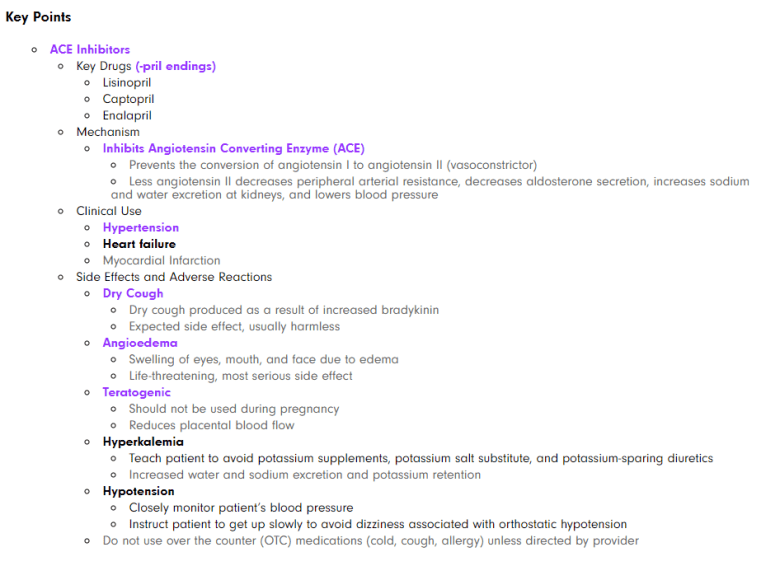
What facts should be included in each video? To answer this question, clinical experts review textbooks, curricula, clinical guidelines, and primary literature to collate everything a student might need to know about a topic. We use proprietary methods to assess how likely each fact is to be tested. This “yield index” is reflected in the color-coding of each of our published fact lists.
2. The Symbols
At Pixorize, we believe the core of a good mnemonic lies in choosing the very best symbols. There are over a million words in English, corresponding to over a trillion (1,000,000,000,000) 2-word phrases. For a given fact such as “pyruvate”, how might we pick an optimal sounds-like symbol (e.g. “private”, “pyre”, “pie ate”, or “pirate”)? Our team uses proprietary methods to find candidates to represent each fact. After visualizing each candidate, we often need your feedback to pick our final symbol. By responding to polls on our website, you are supporting the development of new and better content for all students.
3. The Mnemonic Story
What makes a mnemonic scene “feel cohesive” or “stick” in your memory? To answer this, our team evaluates millions of word relationships to find ways that each symbol can fit into a sensical story. As a thought exercise: What are all the ways that “salt” might relate to “pepper”? Or alternatively, how might “salt” relate to “dog”? Which is “better”? Each story undergoes many rounds of revisions and review for plausibility until it meets our quality standards.
4. The Art
How should we draw beautiful art that also allows you to easily find and memorize symbols? Our artists spend dozens of hours developing symbols into objects and fitting them into a gorgeously rendered art piece. While this is just the tip of the iceberg, our team evaluates how your eye moves over the art, how “crowded” each scene might feel to your brain, as well as how the visual appearance of a symbol might change in your mind after several weeks of “forgetting” has taken place.
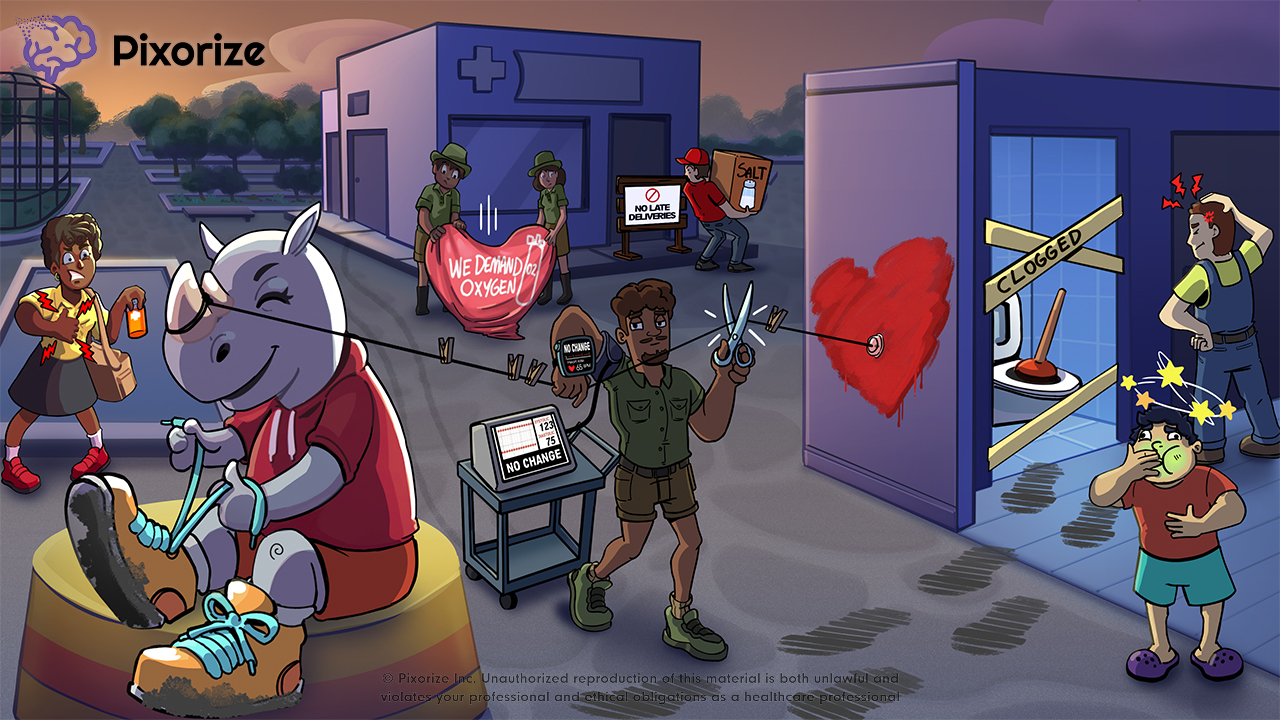
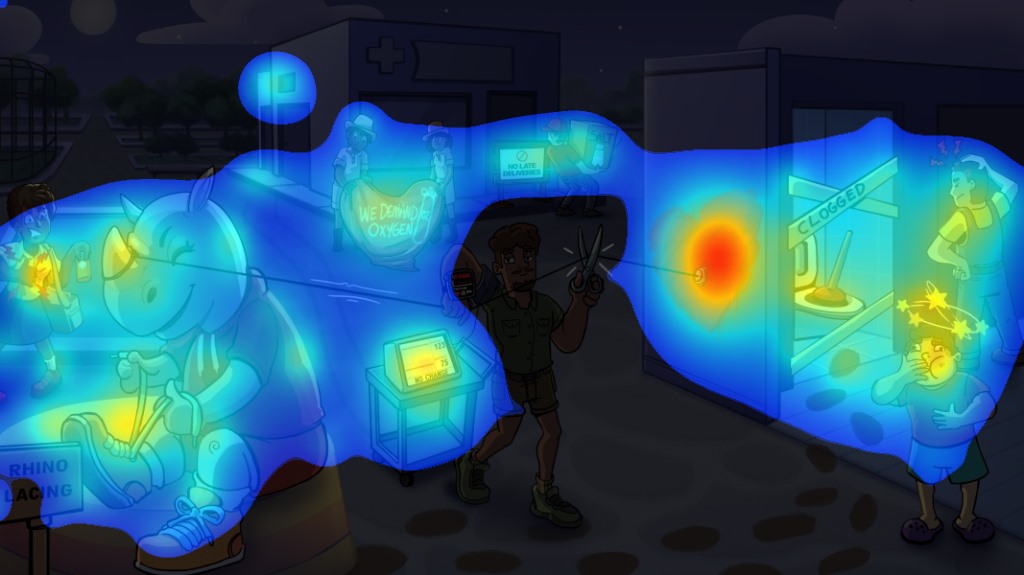
Our art team evaluates how your gaze might move over the art. This is important for ensuring that you remember the symbols in the image and not the less important background details. See the difference by reviewing our video for Ranolazine.
5. The Script and Whiteboards
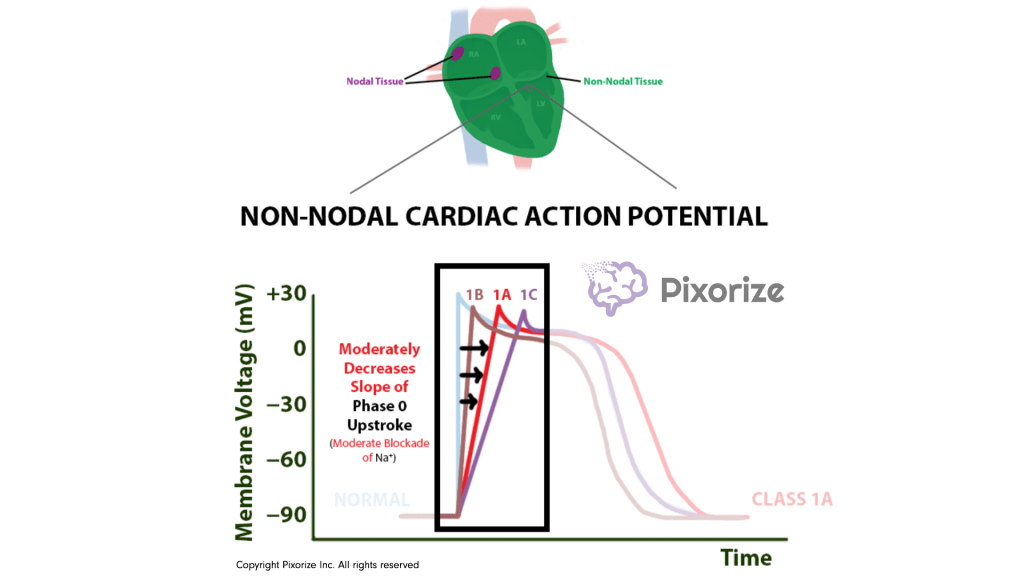
At Pixorize, we aspire to teach the most complex material in healthcare in a way that is simple and effortless to understand. Often a visual aid in the form of a whiteboard is required in order to communicate an abstract idea. For example, while teaching about cardiac action potentials in our antiarrhythmic videos, we found that most existing graphics available online were either grossly inaccurate or over-complicated by unnecessary details. To address this, artists worked carefully with our content experts to create custom visual aids for this topic.
6. The Animation
How should each symbol move in our videos to create a sense of immersion? Our character and environment animators add motion to symbols and the art to bring each scene to life. We carefully evaluate how your gaze and attention moves in response to each of our animations.
We supercharge your memory by creating immersive animations that pull you into the scene.
7. The Sound Design
A key layer in our videos is an immersive soundscape produced by sound designers. The goal is for you to dive into the setting of our mnemonic, while also allowing you to focus on the difficult scientific material being taught in each video.
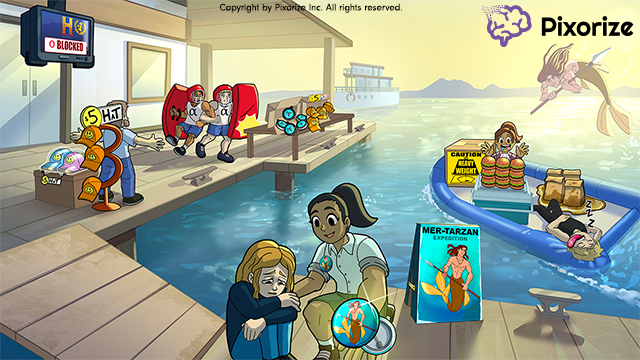
8. The Post-Production Maintenance
The medical field evolves over time, and new facts are frequently discovered, while others are disproved. For example, for decades thyroid C-cells were considered to be derived from neuroendocrine cells from the ectoderm. However, recent evidence suggests that this is in fact incorrect and that these cells actually originate from the endoderm [Source]. Our team maintains running logs of changes and errata to determine when edits or an entire new video is needed for a given topic.
Your Support Matters
The expert-curated and artistic medical content we produce is very expensive to create. Each playlist of videos is the result of over a thousand hours of work by doctors, nurses, engineers, artists, animators, and more. As a small group of healthcare professionals ourselves, we rely on the support of people like you to help us stay afloat. By supporting us at Pixorize.com, you’re signaling to your peers and the medical community that you value innovation in medical education. Your support also funds the livelihoods of our dedicated team who love what they do and make it all possible.
See how Pixorize can help you prepare for your exams:
 Pixorize Blog